• 400+ therapeuten
  • Ook online therapie
Licensed Psychologist, PSYCHOLOOG NIP® - Compassionate and Inclusive Therapy Rotterdam - Julia (she/her) Manasek

Julia (she/her)
Licensed Psychologist, PSYCHOLOOG NIP® - Compassionate and Inclusive Therapy

Weena 70
3012CM Rotterdam
Online also
Engels Duits Nederlands

Psychologist Rotterdam

In today’s fast-paced world, it’s easy to feel disconnected from ourselves and those around us. I’m here to help you reconnect—with yourself, your emotions, and your relationships—because the way we relate to ourselves shapes how we engage with the world.

I create a compassionate, non-judgmental space where you can heal from mental health struggles, shame, and societal taboos—especially around relationships and sexuality—in a way that respects your unique experiences, including the impact of cultural differences, discrimination, and trauma.


How Do I Work?

In my practice, I take a humanistic approach, which means I see you as a whole person—not just a diagnosis or a list of symptoms. You are complex and may carry many different, even conflicting parts of yourself, and that’s completely okay. Unlike systems that often focus on what’s “wrong,” I aim to create a safe, compassionate space where you can explore your experiences without judgment.

My work is attachment-based and trauma-informed, with a focus on Emotionally Focused Therapy (EFT) for individuals. This approach is especially helpful for addressing trauma, attachment wounds, anxiety, and depression. While EFT is a central framework in my practice, I believe in an integrative method, blending various evidence-based techniques that are tailored to fit your unique needs.

Together, we’ll uncover the roots of your struggles, work through shame, and cultivate self-compassion, while also highlighting your strengths and potential for growth. In our intake session, we’ll talk through your goals and desires, and I’ll create a personalized treatment plan tailored to you. This plan is flexible and can be adjusted whenever you wish, as your feedback is always welcome.


About me

Originally from Germany, I've spent the past nine years living in various countries, with over five years in the Netherlands. My experiences living abroad, coupled with growing up with deaf parents and being part of the queer community, have sensitized me to discrimination of minority groups and cultural adaptation challenges. I'm deeply committed to helping you navigate mental health struggles such as anxiety, depression or trauma. Additionally, my passion exploring sexuality and relationships drives me to empower clients to gain confidence, learn about their desires and build healthy connections.


Drawing from personal experience with cross-cultural relationships and ethical non-monogamy, I prioritize open communication and mutual understanding in therapy sessions. In our sessions, you can expect a non-judgmental space to freely discuss mental health struggles, relationships, sexuality, identity crisis, cultural differences, and personal growth. Together, we'll work towards building stronger connections, embracing diversity, and rediscovering joy in your life.

Focus areas: mental health, trauma, cross-cultural differences, expat life, sexuality, relationships, ethical non-monogamy, LGBTQIA+ identities, people with disabilities


Languages: English, German, German Sign Language, Nederlands


You are unsure whether to start therapy or have questions?

Contact me via the Send message button above or below for a free 15-minute consultation!

Please note that I currently have a waiting list of approximately one month. This information is subject to change, please do not hesitate to contact me for the most updated information.

Online therapy

I use the scheduling software MijnDiad to securely store all client data, ensuring full compliance with GDPR regulations. This platform also offers a safe and reliable solution for online therapy sessions, providing both convenience and security for all my clients seeking professional support.

Qualifications and registrations

Education & Training

  • Master of Science in Clinical Psychology, Leiden University

  • Bachelor of Science in Psychology, Leiden University

  • Training in Emotionally Focused Therapy for individuals (EFIT) by ICEEFT Level 1&2
  • Ongoing intervision and supervision with experienced psychologists


Affiliations

  • Licensed Psychologist registered with the Nederlands Instituut voor Psychologen, PSYCHOLOOG NIP® number: 246831


Registrations

Julia (she/her) is listed among the counsellors in Rotterdam.

Therapy languages

Specialisations

  • 1. anxiety
  • 2. depression
  • 3. trauma
  • 4. self-esteem
  • 5. burnout / stress
  • 6. expat life
  • 7. sexuality
  • 8. LGBTQIA+ / Queer identities
  • 9. relationships
  • 10. ethical non-monogamy

Fees

An individual session lasts 60 minutes and costs €100.

If you’d like to work together but my rate is out of your budget, please reach out. I offer a limited number of sliding scale slots.

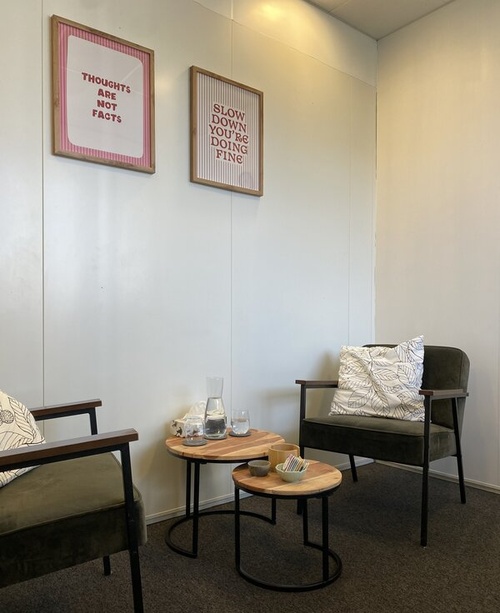
Photos
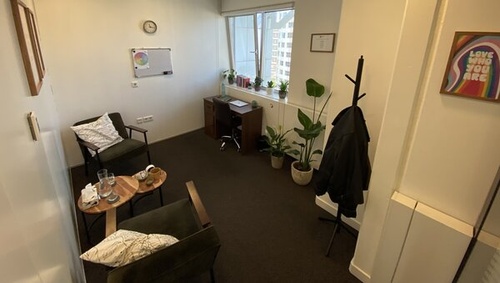
Licensed Psychologist, PSYCHOLOOG NIP® - Compassionate and Inclusive Therapy in Rotterdam

Tips posted by Julia (she/her):

  • Topic | Tip
  • Angsten | Panic Attacks - Grounding Exercise

    Panic Attacks - Grounding Exercise

    5-4-3-2-1 Grounding Exercise for Panic Attacks

    This simple technique can help you refocus and regain a sense of calm during a panic attack:

    Acknowledge FIVE things you see around you: Look around and name five things in your environment.
    Acknowledge FOUR things you can touch around you: Notice textures or objects within reach.
    Acknowledge THREE things you hear: Listen carefully and identify three sounds.
    Acknowledge TWO things you can smell: Focus on scents nearby or recall a comforting smell.
    Acknowledge ONE thing you can taste: Pay attention to the taste in your mouth or take a sip of a drink.

    This grounding exercise helps redirect your focus to the present moment and eases anxiety.


    Meer over Therapie bij angsten in Rotterdam
  • Angsten | Emotional Pain & the Fear of Feeling

    Emotional Pain & the Fear of Feeling

    When we push feelings away, they usually grow over time. Instead, try to make space for what you are feeling and get curious:

    - What are the first signs you're feeling emotional discomfort?
    - What thoughts or beliefs come up?
    - Where do you feel it in your body?
    - What are you afraid of, and how do you usually react?
    - Are your reactions helping—or just protecting you short-term?

    Remember: you are not your feelings, and emotions aren’t who you are.
    They’re messengers—often pointing to what you need.

    For example, when we feel angry that might be a sign that a boundary was crossed or someone's behavior goes against our values.


    Meer over Therapie bij angsten in Rotterdam
  • Angsten | Confidence follows action - not the other way around

    Confidence follows action - not the other way around

    Confidence isn’t something we have before we try — it’s something we build by trying. Every time we step into the unknown, our confidence needs to be rebuilt. That’s normal.

    Think of it like zones:

    Comfort Zone – Feels safe, but there’s little growth here.

    Stretch Zone – Slight discomfort, but this is where learning and confidence grow.

    Panic Zone – Too overwhelming; growth stops here.

    To build confidence, we first need courage. Confidence follows action — not the other way around. Start small. Choose something just outside your comfort zone and do it regularly. As you build evidence that you can handle the unfamiliar, your confidence will grow faster each time.

    It’s okay to feel unsure. That doesn’t mean you’re failing — it means you’re stretching.


    Meer over Therapie bij angsten in Rotterdam
  • Angsten | Self check-in Emotion exploration

    Self check-in Emotion exploration

    1. Understanding the Feeling
    What am I thinking about when I feel this way?
    What state is my body in? (Tense, restless, heavy, numb, etc.)
    How did I take care of myself in the hours/days leading up to this?
    Is this an emotion or physical discomfort from an unmet need?

    2. Exploring Triggers & Patterns
    Did any significant event happen before this feeling?
    What emotions came up? What triggered them?
    What thoughts ran through my mind? How did they shape my emotions?

    3. Coping & Consequences
    What urges did I have? How did I respond?
    What were the consequences of my response?
    Did my response help in the short term? What about the long term?
    What could I do differently next time?

    4. Self-Compassion & Moving Forward
    What does this feeling need from me?
    What is one small, kind action I can take for myself right now?


    Meer over Therapie bij angsten in Rotterdam
  • Angsten | Fear of the Inevitable - Making Peace with Death

    Fear of the Inevitable - Making Peace with Death

    Death is the one certainty we all share, and yet for many people, the fear of it quietly shapes everything. It shows up as health anxiety, panic attacks, a dread that surfaces in the middle of an ordinary day.

    What therapy can offer is not a way to escape this fear, but a way to sit with it differently. Because often, the fear of death is really a question about life: Am I living in a way that matters to me?

    When we deeply accept that life will end - while holding the uncertainty of how and when - something shifts. The ending gives the living its meaning.

    Some questions worth exploring:
    - What exactly are you afraid of and how does that fear shape your daily life?
    - Where do your beliefs about death come from? Have losses or endings in your past shaped the way you see it now?
    - Imagine yourself very old, looking back on your life with a quiet smile - satisfied with the choices you made. What did you work hard on? What did you let go? What was worth committing to, even knowing you might not finish it?

    If death anxiety is something you carry therapy can be a space to explore what it's telling you about how you want to live.


    Meer over Therapie bij angsten in Rotterdam
  • Burn-out | 7 Types of Rest

    7 Types of Rest

    Feeling exhausted all the time, even after getting enough sleep? That’s because rest is more than just physical. We live in a world that constantly overstimulates us without teaching us how to truly rest. Researchers have identified 7 types of rest that we all need:

    1. Physical rest – Includes getting enough sleep and restorative activities like stretching or massage.
    2. Mental rest – Helps quiet an overactive mind through breaks, mindfulness, or journaling.
    3. Sensory rest – Reducing overstimulation from screens, noise, and bright lights.
    4. Creative rest – Reignites inspiration by enjoying nature, art, or music.
    5. Emotional rest – Allows space to express feelings without carrying others’ burdens.
    6. Social rest – Involves setting boundaries with draining relationships and prioritizing uplifting connections.
    7. Spiritual rest – Connects you to a sense of purpose through meditation, prayer, or community.

    Understanding which type of rest you're missing or what areas need extra attention can help you recover from burnout more effectively and feel truly restored.


    Meer over Therapie bij burn-out in Rotterdam
  • Codependency | Codependency

    Codependency

    We all need each other — that is not weakness, that is simply being human. Attachment research is clear on this: our nervous systems are wired for connection, and needing closeness, comfort, and reassurance from others is not something to grow out of. The goal of therapy is never to need people less. It is to feel safe enough to need them more openly.


    Meer over Therapie bij Codependency in Rotterdam
  • Codependency | Codependency

    Codependency

    What gets called "codependency" is often just attachment need that had to go underground. When asking directly for closeness felt risky early in life, focusing on others, keeping the peace, and making yourself useful became the safer route to connection. In Emotionally Focused Therapy (EFIT) we don't pathologise that strategy — we get curious about where it came from. And we work toward something more mutual, where you can receive as well as give, and where your needs have as much room as everyone else's.


    Meer over Therapie bij Codependency in Rotterdam
  • Communicatie | Non-Violent Communication (NVC) – 4 Steps to Clear & Respectful Dialogue

    Non-Violent Communication (NVC) – 4 Steps to Clear & Respectful Dialogue

    NVC helps you express yourself honestly without blame or criticism. It builds understanding by focusing on your own experience rather than labeling or judging others. Here are the 4 key components:

    1. Observation (without evaluation)
    State what you see or hear without interpreting it. Stick to the facts.
    Instead of: “You’re so messy” → Try: “There are socks under the table and in front of the door.”

    2. Feeling
    Express your emotion without blaming the other person.
    “I feel irritated…” (Avoid saying “I feel like you don’t care” – that’s a judgment, not a feeling.)

    3. Need
    Share the underlying need or value connected to your feeling. Positive needs are easier to hear than complaints.
    “...because I need more order in the space we share.”

    4. Request (clear, specific, doable)
    Ask for something concrete, not vague or demanding.
    “Would you please put the socks in the laundry?”

    Example 1:
    “I see socks under the table and by the door. I feel irritated because I need more order in our shared space. Would you be willing to put the socks in the wash?”

    Example 2:
    “When I hear the TV on while I'm working, I feel distracted because I need quiet to concentrate. Could you please lower the volume or use headphones?”


    Meer over Therapie bij communicatieproblemen in Rotterdam
  • Depressie | Low mood - Understanding your Dark Places

    Low mood - Understanding your Dark Places

    Everyone has days that feel heavy. Mood fluctuates that's human, you're not broken. But when the low places start to feel more familiar than the light ones, it's worth paying attention.

    Low mood is rarely just something that happens to you. It's shaped by everything around you and within you - your relationships, your environment, your sleep, what you're eating, how much you're moving, what you're avoiding. The mind and body are not separate systems.

    Which means there is more agency here than it can feel like in the dark moments.

    When you notice your mood dropping, these questions can help you understand what's actually happening:
    - When I'm feeling down what am I thinking about? What story am I telling myself?
    - What state is my body in - am I tired, tense, depleted?
    - How did I look after myself in the hours or days leading up to this feeling?
    - Is this an emotion asking to be felt or physical discomfort from an unmet need like rest, connection, or food?

    Sometimes low mood is a signal worth listening to rather than a problem to fix as quickly as possible. It can be pointing toward something in your life that needs attention - a relationship, a boundary, a change.

    If the dark places are becoming hard to find your way out of, therapy can help you understand what's pulling you there - and what might help you find your way back.


    Meer over Therapie bij depressie in Rotterdam
  • Eenzaamheid | Vulnerability & Self-Protection

    Vulnerability & Self-Protection

    If opening up feels hard, it may not be because you’re “bad at relationships,” but because your system learned to protect itself.

    Try reflecting on:
    - What happens inside you when you consider sharing something personal?
    - Do you fear being judged, rejected, or being “too much”?
    - How did people respond to your emotions when you were younger?
    - What strategies do you use instead (withdrawing, joking, staying busy, staying strong)?
    - Are these strategies helping you feel closer - or just safer?

    Remember: your defenses once made sense. Healing doesn’t mean getting rid of them - it means slowly learning when connection is safer than protection.


    Meer over Therapie bij eenzaamheid in Rotterdam
  • Eenzaamheid | Loneliness & the Need for Connection

    Loneliness & the Need for Connection

    When we feel lonely, the instinct is often to withdraw or tell ourselves we should cope alone. But loneliness is not a personal failure, it’s a signal from your nervous system that you need connection.

    Instead of pushing it away, try getting curious:
    - When do you notice loneliness most strongly (time of day, certain situations)?
    - Do you reach out — or do you tend to shut down?
    - What feels safer: distraction, independence, or closeness?
    - Who feels emotionally “safe enough” to contact, even briefly?
    - What small step toward connection feels manageable right now?

    Loneliness isn’t weakness, it’s a message that you are human and wired to belong.


    Meer over Therapie bij eenzaamheid in Rotterdam
  • Gelukkig zijn | Rethink “I Just Want to Be Happy”

    Rethink “I Just Want to Be Happy”

    Wanting to be happy is natural—but chasing constant happiness can be misleading. Life includes stress, sadness, and uncertainty. Social media and culture often promote the idea that happiness means avoiding all negativity, but that usually leads to more pressure and disappointment.

    Instead, focus on your values—the kind of person you want to be and what truly matters to you. Values give direction and meaning, even when things are tough.

    You can feel unpleasant emotions and still live a meaningful, fulfilling life.

  • Grenzen aangeven | Self-Check-In to Practice Setting Boundaries

    Self-Check-In to Practice Setting Boundaries

    - "What am I feeling or needing at this moment?"
    - "Am I agreeing to this out of obligation or fear of upsetting someone?"
    - "How would I feel if I said no or set a boundary here?"
    - "What would it look like to take care of myself in this situation?"


    Meer over Therapie bij grenzen aangeven in Rotterdam
  • Grenzen aangeven | Boundaries are a gift

    Boundaries are a gift

    Boundaries aren't you trying to control someone else, it is stating a want/need. You are showing the other person how to have a better relationship with you. The other person has the choice to decide if they honor it or not, but you also have a choice of how to protect yourself if they don't


    Meer over Therapie bij grenzen aangeven in Rotterdam
  • Jaloezie | Dealing with Jealousy

    Dealing with Jealousy

    Jealousy is a complex emotion that can reveal deeper fears, needs, and insecurities. Instead of suppressing it, try exploring its roots and stay curious with these questions:

    - What situations bring up jealousy for you? How does it feel in your body? What are some underlying fears you might have (e.g., fear of abandonment, own insecurities)
    - What does security in a relationship mean to you? How can you nurture feeling more secure in yourself and with your partner?
    - How can you express jealousy to your partner in a way that fosters understanding rather than conflict?
    - Can you identify times when jealousy has helped you learn something valuable about yourself or your relationships?
    - How do you differentiate between jealousy as an emotional signal vs. jealousy as a reaction to real issues?


    Meer over Therapie bij jaloezie in Rotterdam
  • Relatieproblemen | Making it about you rather than attacking your partner

    Making it about you rather than attacking your partner

    Healthy relationships are not free of conflict; what truly matters is how conflicts are addressed. Instead of criticizing your partner with statements like, "You did this wrong," focus on expressing yourself constructively. Use this formula:

    State a feeling: Start by sharing how you feel.
    Describe a specific situation: Clearly explain what prompted the feeling.
    Express a positive need: Communicate what you need moving forward.
    For example: "I feel disappointed when you cancel our plans at the last minute. I need you to let me know earlier if something comes up."

    This approach fosters understanding and collaboration rather than defensiveness.


    Meer over Therapie bij relatieproblemen in Rotterdam
  • Relatieproblemen | How to initiate a conversation about sex

    How to initiate a conversation about sex

    We often feel a lot of shame talking about sex with our partner. Acknowledging that sex is a part of your relationship is the first step toward building comfort in discussing it. Open the door to exploring early memories, fantasies, and favorite sexual experiences. To start these conversations, try asking:

    - What is your favorite sexual memory with me?
    - What comes up when you think about the words sex, vagina, vulva, or penis?
    - What were you taught about sex, and what do you wish you had been taught?
    - What does great sex mean to you? What is your favorite part about it?
    - What does intimacy mean to you?


    Meer over Therapie bij relatieproblemen in Rotterdam
  • Relatieproblemen | Turning Towards Bids for Connection (Gottman Method)

    Turning Towards Bids for Connection (Gottman Method)

    In relationships, we constantly send out small signals (or "bids") for attention, affection, or support—like sharing a funny story, asking for advice, or even just making eye contact.

    How you respond to these bids shapes the strength of your connection. You have three choices:

    1. Turn Towards – Engage with warmth and interest (e.g., "That’s funny! Tell me more.").
    2. Turn Away – Ignore or dismiss the bid (e.g., staying silent or looking at your phone).
    3. Turn Against – React with irritation or hostility (e.g., "Why are you bothering me?").

    Couples who consistently turn towards each other build trust and emotional closeness. Even small moments—like acknowledging your partner’s excitement or offering a reassuring touch—create a foundation for long-term intimacy and happiness.


    Meer over Therapie bij relatieproblemen in Rotterdam
  • Relatieproblemen | How Childhood Attachment Affects our Relationships Today

    How Childhood Attachment Affects our Relationships Today

    There are 4 different attachment styles:

    1. Secure Attachment: Securely attached individuals grow up with caregivers who consistently meet their needs, fostering emotional stability and healthy relationships. As adults, they are comfortable with intimacy, balance closeness with independence, and communicate well.

    2. Avoidant Attachment: Avoidant individuals struggle with emotional closeness, often shutting down or avoiding vulnerability. This stems from childhood experiences of unresponsive caregivers. They may seem distant, but deep down, they fear rejection. Learning to embrace emotional closeness can improve their relationships.

    3. Anxious Attachment: Those with anxious attachment fear abandonment and often seek constant reassurance. This develops from inconsistent caregiving, leading to self-esteem and trust issues. Anxious individuals may struggle with emotional regulation and rely heavily on their partner for validation, which can cause relationship tension.

    4. Disorganized Attachment: Rooted in trauma or inconsistent care, disorganized attachment leads to emotional instability. Adults with this style may struggle with fears of abandonment and building stable relationships. Healing often requires professional support to address past trauma and develop healthier relational patterns.

    By understanding our attachment patterns, we can make conscious choices to build healthier relationships. Through therapeutic support it is possible to heal from early attachment wounds and create more secure relationships with yourself and with others.


    Meer over Therapie bij relatieproblemen in Rotterdam
  • Trauma | Healing from Parentification: Learning it's okay to be cared for

    Healing from Parentification: Learning it's okay to be cared for

    If you grew up feeling like you had to be “the adult” in your family - managing chores, caring for siblings, or supporting your parents emotionally - that’s called parentification. It’s not your fault, and it can leave lasting stress or guilt.

    A simple way to start healing is to give yourself permission to just be cared for now. Try small steps like:
    - Saying “no” to things that feel too heavy
    - Asking a trusted friend or therapist for support
    - Scheduling regular “play” or rest time, even if it feels strange

    You don’t have to carry every burden anymore.


    Meer over Therapie bij trauma in Rotterdam
  • Trauma | Breaking free from familiar but unhealthy patterns in relationships.

    Breaking free from familiar but unhealthy patterns in relationships.

    If you catch yourself drawn to the same unhealthy relationships or situations, you might be experiencing repetition compulsion - your mind’s way of trying to “redo” a painful past to finally feel safe or in control.
    Pause when you notice a familiar pattern.
    Ask yourself, “Does this feel safe, or just familiar?”
    Practice choosing even small, different responses - like reaching out to a trusted friend or setting a boundary

    Healing starts with noticing the cycle and giving yourself permission to try a new path.


    Meer over Therapie bij trauma in Rotterdam

Contact

Great, you are taking the first step.
Leave a message and I will contact you as soon as possible.


Attention: there were some errors. Please check the marked fields below.
Name *
City/town *
E-mail *
Telephone
Message *
 
Sending message...

Your message has been sent!

Bedankt voor je bericht.


Nadat ik je bericht gelezen heb, neem ik zo spoedig mogelijk contact met je op.

Als je binnen een paar (werk)dagen geen reactie ontvangen hebt, check dan je spambox. Mogelijk dat mijn reactie daarin terechtgekomen is.